
Have you ever pressed the button on your garage door remote, expecting the smooth hum of the motor, only to be met with a terrifyingly loud "BANG"? Or maybe the motor is groaning, but the heavy door won't lift even an inch off the ground. If you are experiencing this right now, take a deep breath. You are likely dealing with a broken spring.
As a garage door technician with over 15 years of hands-on experience, I have seen it all. From cars trapped inside garages on Monday mornings to dangerous DIY attempts that ended in emergency room visits, a broken spring is not something to take lightly.
In this comprehensive guide, we will walk you through exactly what these springs do, how to tell if yours has snapped, the unique ways Austin's climate affects your door, and why finding a professional for broken garage door spring repair Austin, TX is the smartest, safest move you can make.
The Heartbeat of Your Garage Door System
Before we talk about fixing the problem, it helps to understand how the system works. Many homeowners believe that the electric opener (the motor on the ceiling) does all the heavy lifting. That is actually a myth!
The real muscle behind your garage door is the spring system. An average residential garage door weighs anywhere from 130 to 400 pounds. The opener’s job is just to guide the door and push it gently along the tracks. The springs are the components that actually bear the massive weight, counterbalancing the door so it feels light enough to lift with just one hand.
Extension Springs vs. Torsion Springs
There are two main types of springs used in residential homes today. Knowing which one you have is the first step in diagnosing your problem.
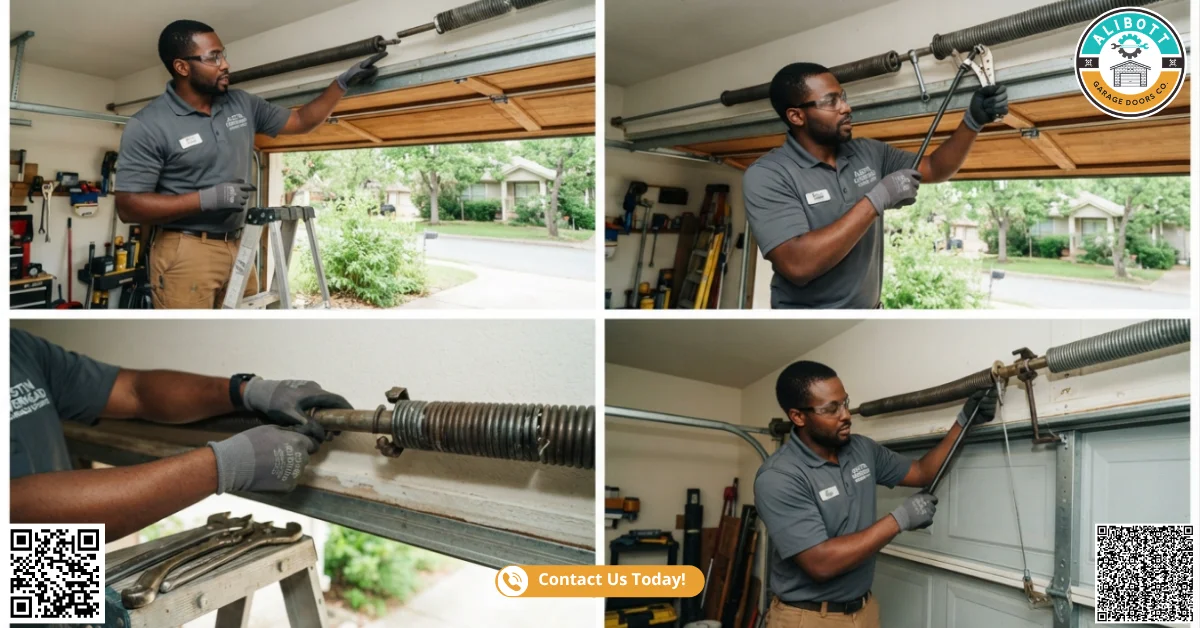
- Extension Springs: These are long, skinny springs that run parallel to the horizontal tracks on the ceiling. When the door closes, these springs stretch out like giant rubber bands. When the door opens, they pull back, lifting the door. Because they are stretched under massive tension, they can be incredibly dangerous if they snap without a safety cable installed.
- Torsion Springs: This is the more modern, standard system. You will find torsion springs mounted on a metal shaft directly above the closed garage door. Instead of stretching, these springs twist (or create torque) to lift the door. They are generally considered safer and longer-lasting than extension springs.
Regardless of which type you have, both are under extreme, life-threatening tension. This is why [OSHA or Safety Council Guidelines on Spring Tension] always advises against homeowners tinkering with these components.
Top 7 Signs You Need Professional Repair
How do you know for sure that your spring is the culprit? Sometimes the signs are obvious, but other times, they can mimic a broken opener or bad track. Here are the top seven signs it is time to call for broken garage door spring repair Austin, TX.
1. You Heard a Sound Like a Gunshot or Firecracker
This is the most common and alarming symptom. When a spring finally reaches the end of its lifespan, it doesn't quietly fade away—it snaps violently. The sound is often described by homeowners as a loud gunshot, a small explosion, or a heavy object crashing to the garage floor. If you heard a loud bang from the garage but found nothing knocked over, look up at the springs.
2. The Door Will Not Open
If your spring is broken, the heavy lifting mechanism is gone. Your electric opener is not strong enough to lift 200 pounds of dead weight on its own. You might hear the motor straining, humming, or grinding, but the door will refuse to budge. Pro Tip: Do not keep pressing the button! Forcing the opener to lift a dead door can strip the internal gears and burn out the motor, turning a spring repair into a much more expensive motor replacement.
3. You See a Visible Gap in the Spring
This is the easiest way to confirm the problem. Grab a flashlight and look at the torsion spring mounted above your door. If the spring is broken, you will see a clear, visible gap (usually an inch or two wide) right in the middle of the coils. This means the metal has completely separated.
4. The Door Slams Shut Quickly
A properly balanced garage door should glide down smoothly and gently touch the concrete floor. If your springs are failing or entirely broken, the door will plummet down rapidly. This is a severe safety hazard, especially if you have children or pets. The spring is no longer holding the door's weight, meaning gravity is in full control.
5. The Door Looks Crooked or Off-Track
If you have an extension spring system and one spring breaks but the other remains intact, the door will pull unevenly. When you attempt to open it, one side will lift while the other side sags. This will cause the door to become crooked and eventually jam in the metal tracks.
6. The Emergency Release Rope Doesn't Help
Every automated garage door has a red emergency release rope hanging from the center track. Pulling this rope disconnects the door from the motor, allowing you to lift it manually during a power outage. If you pull this rope and still cannot lift the door without extreme physical effort, your springs are broken.
7. The Top Section of the Door is Bent
When a spring breaks, the opener might still try to push the door open or closed. Because the door is incredibly heavy without the spring's help, the pressure from the motor pushing against the top panel can cause the metal to bend or crumple.
Why Austin Weather Matters to Your Garage Door
Living in Central Texas brings its own unique set of challenges for home maintenance. When it comes to broken garage door spring repair Austin, TX, the local climate actually plays a huge role in how long your equipment lasts.
The Impact of Extreme Heat and Humidity
Austin summers are notoriously hot and humid. Metal expands when it is hot and contracts when it gets cold. During our blazing summer months, your garage can easily reach temperatures over 100 degrees. This extreme heat bakes the metal springs, causing the factory lubrication to dry out rapidly. When the metal becomes dry and brittle, the friction between the twisting coils increases drastically.
Rapid Temperature Swings
We also experience unpredictable winter cold fronts. A sudden drop from 80 degrees down to freezing causes the metal to rapidly contract. This stress, known as metal fatigue, weakens the structural integrity of the coils. Many 15-year veteran technicians will tell you that the busy season for snapped springs is exactly when these sudden cold snaps hit Austin.
To combat this, your springs need seasonal maintenance, which brings us to an important rule: keep them lubricated! [ Manufacturer's Guide on Proper Spring Lubricants] provides great insight into what kind of spray you should use (hint: avoid WD-40; use a lithium-based garage door lube).
The Hidden Dangers of DIY Garage Door Spring Repair
In the age of online video tutorials, it is tempting to order a part online and try to fix it yourself to save a few dollars. As an experienced technician, I cannot stress enough how dangerous this is. Garage door springs are not like fixing a leaky sink or painting a bedroom.
- Extreme Stored Energy: A wound torsion spring holds enough torque to lift 300 pounds. If the tension is released accidentally while you are working on it, the winding bars can fly out at bullet-like speeds.
- Risk of Lacerations and Amputations: If your hands are in the wrong place when a spring snaps or unwinds, the sheer force can crush fingers or cause severe lacerations.
- Property Damage: Dropping a heavy, un-sprung door can crack your concrete floor, shatter the door panels, or crush anything sitting underneath it.
- Wrong Parts Sizing: Springs are not "one size fits all." They must be perfectly matched to the specific weight and height of your door. If you install a spring that is too strong, the door won't close. If it's too weak, the door will be too heavy.
For your safety and peace of mind, leaving this to a professional is the only recommended course of action.
Step-by-Step: What to Do If Your Spring Breaks Right Now
If you find yourself stuck at home right now with a broken spring, follow these steps to keep your family safe until help arrives:
- Stop Touching the Button: As mentioned earlier, do not try to force the automatic opener to lift the door.
- Do Not Touch the Spring: Keep your hands away from the broken metal. The jagged edges are sharp, and if it is an extension spring, it might still have residual tension.
- Keep Kids and Pets Away: A door with a broken spring is a heavy, unpredictable hazard. Ensure children and pets are kept out of the garage.
- Call a Local Professional: Look for a trusted local expert specializing in broken garage door spring repair Austin, TX. You need someone with the right tools, exact replacement parts, and training.
- If You Must Get Your Car Out: If you are trapped and absolutely must leave, you will need help. Two healthy adults can sometimes lift an unsprung door manually. Pull the red emergency release cord, lift the door evenly from both sides, and have a third person clamp locking pliers onto the metal tracks just below the rollers to hold the door open while you back the car out. Only do this in an absolute emergency.
How Professionals Diagnose and Fix the Problem
When you call a trusted expert for broken garage door spring repair Austin, TX, what exactly are you paying for? Here is a behind-the-scenes look at the professional repair process.
First, we conduct a full safety inspection of the entire system. We don't just look at the broken spring; we check the cables, the drums, the rollers, and the tracks. When a spring snaps violently, it can easily knock cables off their drums or bend the tracks.
Next, we weigh the door. This is a critical step that many amateurs skip. Because a wooden door weighs differently than an insulated steel door, we calculate the precise weight to calibrate the exact wire size, inner diameter, and length of the new springs.
Then comes the safe removal of the old parts and the installation of the new ones. We use specialized winding bars to apply the exact amount of tension needed to counterbalance the door perfectly. Finally, we perform a "balance test." We lift the door halfway up and let go. If the spring tension is perfect, the door will float entirely in place—it won't drop to the floor, and it won't fly up. [Home Improvement Site on Checking Door Balance].
Simple Maintenance Tips to Extend the Life of Your Springs
Once you have your new springs installed, you probably want them to last as long as possible. Here are three simple maintenance tips you can do yourself:
- Listen to Your Door: Pay attention to how it sounds. If it starts squeaking, grinding, or popping, it is crying out for lubrication.
- Lubricate Twice a Year: Buy a can of Garage Door Spray Lube (silicone or white lithium grease). Lightly spray the coils of your springs in the spring and fall. This reduces friction and prevents the metal from drying out and snapping prematurely.
- Look, but Don't Touch: Once a month, do a visual inspection. Look at the springs, cables, and hinges. If you notice severe rust, fraying cables, or sagging springs, call a pro before a catastrophic break happens.
Frequently Asked Questions (FAQs)
Does homeowner's insurance cover a snapped spring? Generally, no, unless the door was damaged by a covered peril like a vehicle collision or severe weather. Standard wear and tear of mechanical parts is almost always excluded from home policies.
Can I replace just one spring if I have two? No, you should always replace both springs simultaneously because they share the exact same lifespan and wear rate. If one spring has broken from metal fatigue, the other one is likely going to snap very soon anyway.
How much clearance is needed to replace a torsion spring? Most standard residential setups require at least 12 to 15 inches of headroom above the horizontal track to work safely. Low-clearance garages often require specialized dual-track hardware to accommodate the spring system.
What is the standard lifespan or cycle count for these parts? A standard builder-grade spring set is rated for about 10,000 cycles, which usually translates to around 7 to 9 years of average daily use. If you use your garage door like a front door, upgrading to high-cycle springs can extend that life up to 100,000 cycles.
Final Thoughts
A broken garage door spring is inconvenient, loud, and incredibly frustrating. However, understanding what the springs do and recognizing the warning signs early on can save you from a lot of stress. Remember, the springs are the true muscle of your garage, bearing hundreds of pounds of pressure every single day.
Because of the extreme tension and danger involved, this is the one home improvement project you should never attempt to DIY. Prioritize your safety, protect your property, and ensure your door runs smoothly for years to come by relying on seasoned experts who understand the unique demands of Texas weather.
How Can Alibott Garage Doors Co Help You?
When you need fast, reliable, and safe broken garage door spring repair Austin, TX, you don't have to tackle the stress alone. At Alibott Garage Doors Co, our expert technicians carry all sizes of high-quality springs on our trucks to get your door back up and running the very same day. We balance your door perfectly, lubricate the moving parts, and guarantee our work so you can get back to your routine with peace of mind.
Don't let a trapped car ruin your week! Let the local experts handle the heavy lifting.
Alibott Garage Doors Co
Address: Burnet Rd, Austin, TX 78756, United States
Phone Number: (512) 489-9877
Call us today to schedule your fast and safe repair!